
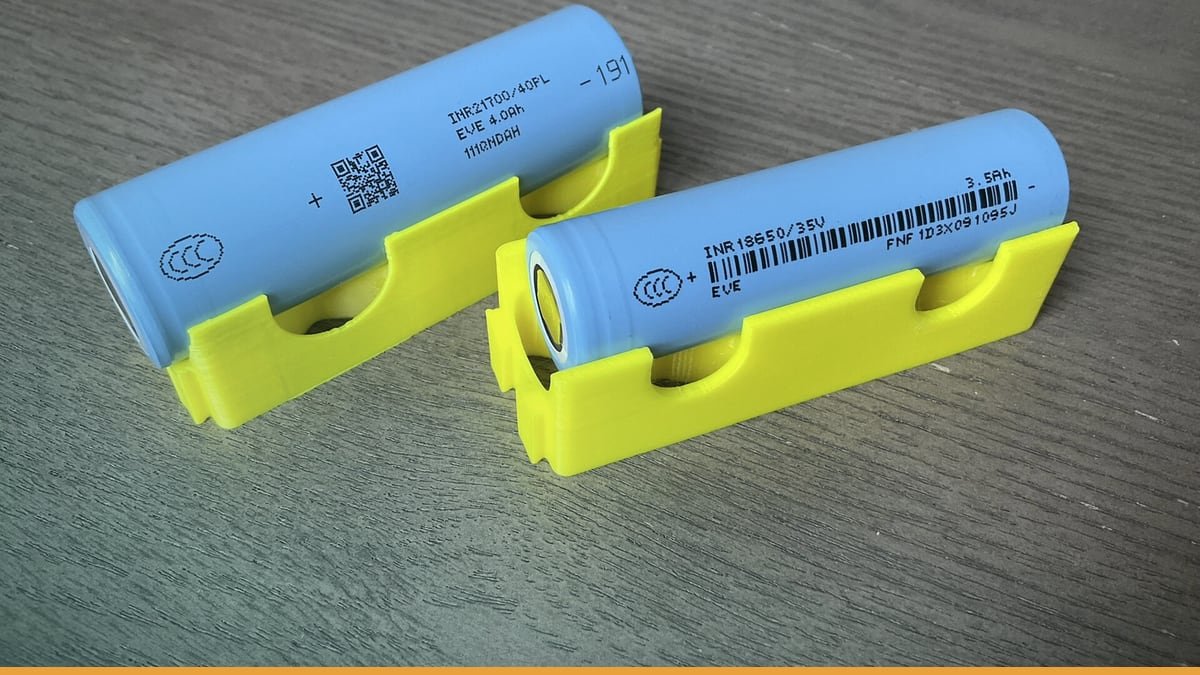
Header image: 18650 and 21700 lithium ion battery cell by Sevenethics, CC0, via Wikimedia Commons — cropped to 16:9 and colour-adjusted.

Key takeaways
- DEER removes SEI layer to restore 95% battery capacity.
- Could cut e-waste and delay EV/laptop replacements.
- Lab proof needs cost, scalability, and timeline validation.
End-of-life lithium-ion batteries just got a second lease on life. DEER—discharge-electrolyte exchange-regeneration—chemically removes the solid electrolyte interphase (SEI) layer on electrodes. Result? 95% of original capacity restored.
That’s not incremental. That’s a near-full reset.
Right now, we toss lithium-ion batteries at 70-80% capacity. EVs, laptops, phones—everything. DEER flips the script. Batteries behave like new.
And it doesn’t stop at one refresh. Run it again—back to 90% capacity. Multiple revivals before true end-of-life.
Why This Matters
DEER sidesteps that. If it scales:
- Cuts demand for new raw materials by keeping batteries in circulation.
- Delays or eliminates replacements in EVs, smartphones.
- Reduces e-waste by extending usable lifespan.
DEER could turn that into a bug.
The Catch
There’s always a catch. With DEER, it’s huge: does it work outside the lab?
The research doesn’t say:
- Cost. Chemical processes can be expensive. No scalability or economics mentioned.
- Process details. No chemicals, energy requirements, or waste generated. If toxic or energy-hungry, benefits evaporate.
- Longevity. 95% capacity is great. If degradation accelerates post-regeneration, it’s a temporary fix.
- Market timeline. No commercial partners, pilot programs, or roadmap. Lab result, not a product.
Breakthroughs in battery tech are common. Most never scale. DEER could be different—but right now, it’s just promising.
What’s Next?
DEER at scale could shift the industry. Recycle for function, not materials. Keep batteries in use longer. Reduce waste. Ease supply chain pressure.
But is it better than what we have? If DEER is cleaner, cheaper, scalable—it could replace some of that. If not? Just another lab curiosity.
Who benefits? Extended battery life disrupts replacement cycles. Adoption needs financial or regulatory push.
For now, DEER is a proof of concept. Works in the lab. Next step? Prove it works in the real world. That’s where it gets interesting.
Leave a Reply